

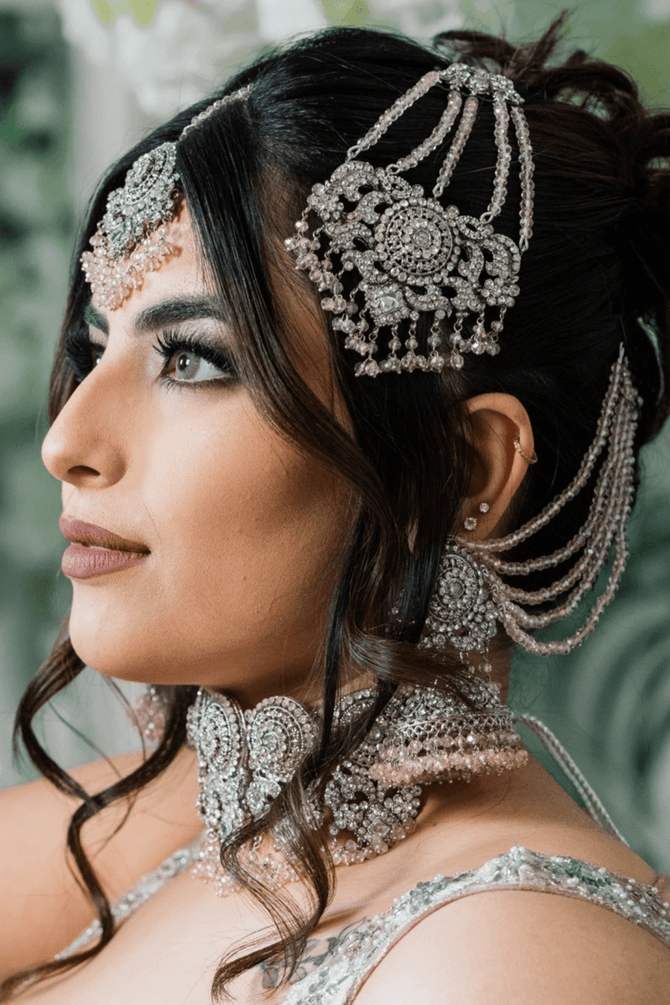

Something has shifted in South Asian households across the diaspora, and it is worth naming clearly. A new generation of daughters is being raised differently than their mothers and grandmothers were. Educated. Encouraged to build careers. Told, often for the first time in their family's history, that they do not need a husband to complete their life or define their worth.
This is a genuinely good thing, and it deserves a moment of real credit before we go any further. Parents who once measured a daughter's value by how well she could cook, how quietly she could endure, and how little she complained are now sending her to law school, encouraging therapy, telling her to leave a relationship if it does not feel right. That is hard won, generational progress, and it did not happen by accident. It happened because someone decided to raise daughters differently on purpose.
But progress that only travels in one direction creates its own kind of imbalance. We rewrote the manual for daughters. We have not done the same work for many of our South Asian sons, and the gap is starting to show.
The Script We Rewrote, and the One We Forgot
In many South Asian households, there has long been an intense focus on preparing daughters for the world. Be independent. Be educated. Be resilient enough to handle whatever life, or marriage (if it's what the woman wants), hands you. It is a survival skillset, taught with love and often with fear, frequently by mothers who did not have the same options themselves and wanted better for their daughters.
What gets skipped, again and again, is the other half of the equation. We rarely hear a parent say, with the same urgency we use for daughters, raise your son to be a good partner. We teach daughters to compromise, to read a room, to anticipate what a husband or in-laws might need before they even ask. We do not, with anywhere near the same consistency, teach sons to notice, to ask first, to carry their share of the emotional and domestic weight without being told.
The result, two generations into this shift, is a group of women who are more capable than ever of standing on their own, paired with a group of men who were not necessarily raised to stand beside them. Not because they are incapable of it. Because nobody made it a priority to teach them.
This is not a new observation in feminist or diaspora writing, but it lands differently when you see it play out in something as small and specific as an order note.
What Inaury's Inbox Tells Us About the Men Who Get It Right

Here is where this conversation stops being theory for us. Every week, Inaury fulfills orders for South Asian jewelry, and a striking number of them come with a note attached. Not from the women buying for themselves, but from the men buying for them, often with a level of detail that tells you something about how they were raised.
The note that says he was paying attention. We regularly get orders that read like this is for my wife, she only wears silver, or she has been eyeing this for weeks and finally caved. These are not panicked, last minute purchases made out of obligation. They are notes from men who know their partner's taste well enough to shop for it without being handed a list.
The note that proves he was listening. One of our favorites came from a fiance who told us his partner had sent him the product link herself, weeks earlier, almost as a passing comment. He remembered it, ordered it without telling her, and asked us to gift wrap it nicely before she even knew it had arrived. She dropped a hint once. He caught it, held onto it, and acted on it.
The note that shows he thought about presentation, not just the purchase. Some men ask for specific wrapping, a particular note card, or timing the delivery around an anniversary or a hard week she has had. That is not something most people think to do unless someone modeled that kind of thoughtfulness for them first.
These are not just transactions. They are evidence that the right men are listening.
We want to be careful here. We are not claiming that every customer note is definitive proof of a perfectly raised man, and a thoughtful gift is not automatically the same thing as a thoughtful, equal partner over the long run. People are more complicated than a single order note can capture. But these small, specific details, remembering a metal preference, catching an offhand hint, caring about how an unboxing feels, are not nothing either. They are what attentiveness looks like in practice, in real time, with no audience watching. And it is hard not to wonder what kind of household taught a person to pay attention like that.
So What Does It Actually Take to Raise a Son Like That?
If we take the question seriously instead of treating it as a nice sentiment, a few specific things stand out.
Emotional intelligence has to be normalized early, not introduced later as a correction. Boys are frequently taught, directly or simply by example, that emotion is something to manage privately and present minimally. Vulnerability, attentiveness, the ability to say out loud I noticed you were quiet today, are not personality traits someone is born with. They are skills, built through repetition and permission, and skills have to be actively taught rather than hoped for.
Domestic labor cannot remain a daughters-only curriculum. When a son grows up watching one parent manage the household largely alone, while household tasks are quietly treated as someone else's job, he absorbs a lesson whether or not anyone ever says it out loud. Cooking, cleaning, and caretaking, including emotional caretaking, need to be part of how every child in the house is raised, not a chore list divided along gender lines before anyone is old enough to question it.
Listening is a trained skill, not a personality trait some men happen to have. The fiance who remembered exactly what his partner wanted did not arrive at that moment by luck. Somewhere, at some point, he learned to actually listen when a woman spoke, to take her preferences seriously instead of half hearing them while waiting for his turn to talk. That habit starts young, and it starts with how a boy is spoken to, and listened to, inside his own home.

None of this requires shame or blame directed at any one specific family or father. Most parents are doing their best with the script they were handed. What it requires is intention, the same intention so many South Asian parents are already bringing to how they raise their daughters, simply extended to cover sons too.
Jewelry as a Quiet Symbol of a Bigger Shift
There is a reason this conversation feels personal to us at Inaury, beyond the obvious fact that we sell jewelry. Jewelry, in South Asian culture, has historically been something a woman received rather than something she chose for herself. Part of a dowry. A family obligation. A gift decided for her by someone else's idea of what she should want, not with her input at all.
So when a man buys jewelry today because he noticed what she actually likes, then writes a note asking us to wrap it with care, something has quietly changed underneath the surface of that transaction. It is no longer a ritual handed down by tradition without thought. It is a small, specific, voluntary act of attention. A sign that somewhere along the way, someone taught him to look closely enough to know what would genuinely make her feel seen, rather than simply checking a cultural box.
We do not think a single gift note tells the whole story of anyone's character or marriage. But we think it is real evidence that the story is shifting, one household and one order at a time, and that the men already getting it right deserve to become the new standard we raise our sons toward, rather than the pleasant exception we are quietly surprised by.
Our daughters were taught to stand on their own. It is time we taught our South Asian sons how to stand beside them.
Shop Inaury
Jewelry Worth Writing a Note About
Contemporary South Asian jewelry, made for the people who pay attention.
Ships from New York.
Frequently Asked Questions
Why are South Asian daughters raised to be more independent now than in previous generations?
Educational and economic opportunities for women have expanded significantly across the diaspora, and many South Asian parents, often mothers who did not have the same options themselves, have made a deliberate choice to raise daughters with financial independence and the ability to leave situations that do not serve them.
Are South Asian sons taught the same emotional and domestic skills as daughters?
Not consistently. While daughters are frequently raised with an emphasis on adaptability, compromise, and caretaking, sons are less often given the same explicit lessons in emotional expression, domestic responsibility, or active listening within South Asian households.
How can parents raise sons to be better partners?
Three areas matter most: normalizing emotional expression in boys from a young age, involving sons in household labor rather than treating it as a daughters-only task, and modeling active listening so sons learn to take a partner's preferences and boundaries seriously.
Does buying jewelry as a gift actually reflect how a man was raised?
Not entirely on its own. A single gift does not prove anything definitive about someone's character or upbringing. But small details, remembering a preference, noticing an unspoken hint, wanting a gift to feel special, often reflect a broader pattern of attentiveness that tends to show up elsewhere in a relationship too.
What is the diaspora's role in shifting South Asian gender norms?
Diaspora communities often sit at the intersection of inherited cultural expectations and the social norms of the country they live in, which can accelerate change. Many diaspora parents are actively choosing to raise daughters, and increasingly sons, differently than they themselves were raised.


